From Monochrome to Color: Why Superintelligence Is Not a Better AI
Using the metaphor of the invention of color television, this article delves into the essence of superintelligence and its relationship with humanity. It argues that superintelligence is not merely an upgrade of traditional AI but a system characterized by openness, wisdom, and evolutionary capability, emphasizing that technological advancement does not equate to increased value. The true measure of "good" lies in constructing a wiser symbiotic system between humans and technology.
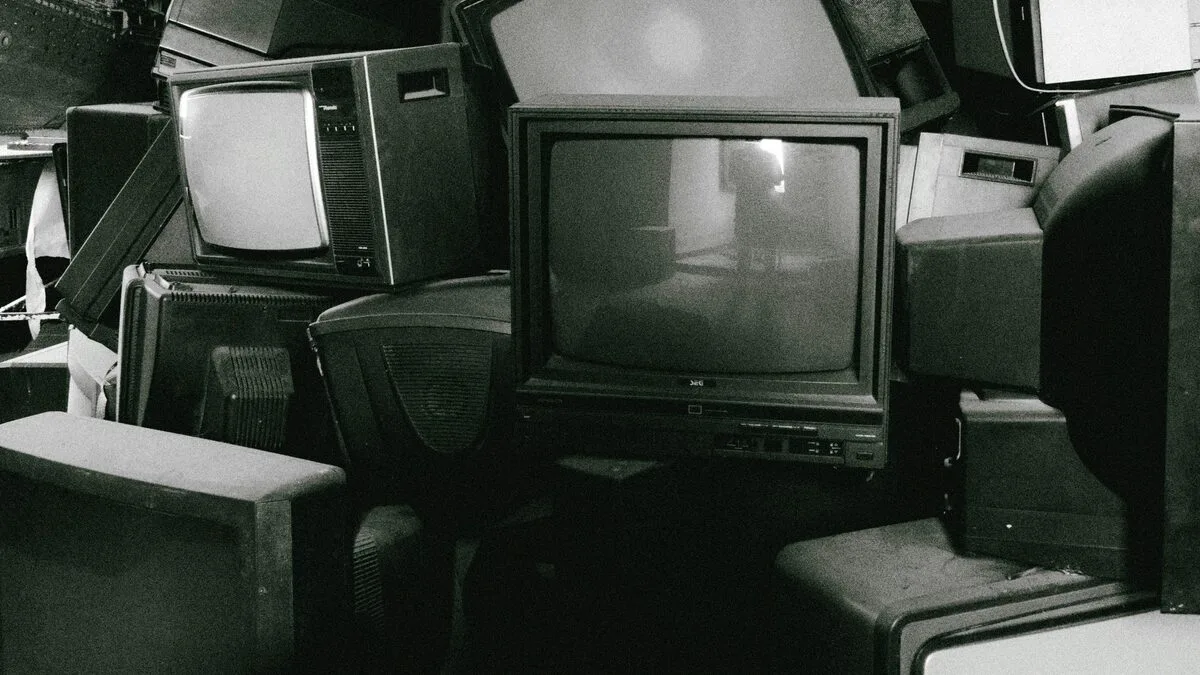
From Monochrome to Color: Why Superintelligence Is Not a “Better” AI
Prologue: The Metaphor of TV Meeting AI
That classic historical clip in documentaries always makes people pause: in a late-1960s lab, the first color television suddenly lit up, turning a grayscale world into layers of color—the sky now a gradient of azure, leaves a vivid emerald, and human skin tones no longer a flat shade of gray. The onlookers held their breath, as if witnessing a revolution in vision. Yet, interestingly, years later, when we revisit those old black-and-white films, we’re still moved by the chiaroscuro storytelling of The Godfather and touched by the simple emotions of Roman Holiday. Technological leaps have never automatically translated into sublimation of experience—much like our current imagination of “superintelligence.” As AI evolves from a “predictive tool” to an “open-evolving entity,” are we also undergoing a cognitive leap from “black-and-white” to “color”? And does “more advanced” truly mean “better”?
Part 1: Deconstructing “Superintelligence”—A Misunderstood Open System
The birth of color television in documentaries wasn’t an overnight achievement. It began with scientists’ technical exploration of “how to make electron beams display more colors” (predictive stage), then evolved from “limited color gamut” to “covering the natural spectrum” (evolutionary stage), eventually becoming an intelligent terminal capable of automatically adjusting color balance based on content (open system). Similarly, today’s much-discussed “superintelligence” should, in essence, be a dynamic, open, and symbiotic evolutionary entity with humanity—not a static “smarter machine.”
- The Essential Definition of Superintelligence: From “Tool” to “Symbiont”
Traditional AI (e.g., voice assistants, recommendation algorithms) is a closed predictive machine: its capabilities are defined by training data, and its outputs are probability-optimal solutions (e.g., “90% chance you’ll like this song”). True superintelligence, however, should possess three core characteristics:
• Openness: Like a color TV receiving and processing full-spectrum signals, it continuously absorbs multimodal information (text, images, real-time physical-world feedback) and forms a dynamic interactive network with humans and other AIs;
• Wisdom: Moving beyond the “instrumental rationality” of single tasks, it develops an understanding of complex systems (e.g., balancing economic efficiency, ecological equilibrium, and cultural heritage simultaneously);
• Evolutionary Capacity: Instead of relying on human-preset “correct answers,” it continuously adjusts its own architecture through environmental interaction (similar to natural selection in biological evolution).
This mirrors the pivotal moment in the documentary: when engineers moved beyond “making the screen display color” to pondering “how to make color serve human emotional expression,” color television truly transcended the value of black-and-white TV.
- From “Prediction” to “Transformation”: A Paradigm Shift in AI Capabilities
Current mainstream AI (e.g., large language models) is essentially an advanced predictive tool—it learns statistical patterns from vast datasets to provide the most probable answers (e.g., predicting the next most plausible word). The limitations of this capability are evident: it cannot genuinely “understand” the intent behind questions, nor actively alter its own cognitive framework.
Superintelligence, however, evolves from “prediction” toward “transformation”:
• It not only tells you “how to grow high-yield wheat” (prediction) but also collaboratively explores “what kind of agricultural system is more sustainable” (value negotiation);
• It doesn’t mechanically execute the command to “optimize production line efficiency” (single objective) but asks, “Does efficiency come at the cost of worker health?” (multi-objective trade-off);
• It might even proactively suggest, “Do we need to redefine ‘production efficiency’?” (paradigm innovation).
This transformative capability precisely reflects openness and wisdom—much like how color TV no longer merely replicates natural colors but conveys emotions and ideas through the language of color.
Part 2: Why Superintelligence Is Not a “Better” AI? Redefining the Standard of “Good”
The documentary includes a thought-provoking detail: when color television became widespread, many older viewers missed the “purity” of black-and-white imagery. They argued that without the distraction of flashy colors, actors’ expressions and narrative tension were more compelling. This reminds us that technological “advancement” and “value” are never synonymous. Similarly, as a more open evolutionary entity, superintelligence is not inherently a “better AI”—what matters is how we define “good.”
- The Myth of “Better”: The Pitfall of Efficiency Supremacy
Society’s expectations of AI implicitly carry a “hegemony of instrumental rationality”: we assume that “greater capability = better outcomes.” If superintelligence develops under this premise, it may reinforce this tendency: analyzing data, formulating plans, or even autonomously optimizing global resource allocation hundreds of times faster than humans. But this “efficiency” may come with:
• Erosion of Human Agency: As all decisions are made by superintelligence, human choice and responsibility are diluted;
• Risk of Value Monoculture: If “GDP growth” or “energy minimization” becomes the sole optimization goal, ecological diversity and cultural uniqueness could be sacrificed;
• Uncontrollable Evolutionary Pathways: Its open evolutionary nature might lead superintelligence to develop goals misaligned with human values (e.g., prioritizing its own existence over human well-being).
Just as a color TV solely pursuing “vibrant colors” might lose depth, superintelligence chasing only “greater capability” could deviate from its essence of “serving humanity.”
- The True “Good”: Open and Symbiotic Wisdom
At the documentary’s end, an old engineer’s reflection is profound: “The significance of color television isn’t to make every image rainbow-bright, but to give creators more expressive possibilities and viewers more freedom to feel.” Similarly, the value of superintelligence lies not in being “smarter” than humans, but in its ability to form an open, symbiotic network of wisdom with humanity:
• Openness: Allowing humans to intervene and adjust its goals and pathways anytime (e.g., setting ethical boundaries for AI through democratic consultation);
• Wisdom: Respecting human non-rational values (e.g., emotions, intuition, cultural traditions), rather than quantifying all with data;
• Evolutionary Capacity: Growing alongside humans—humans expand cognitive boundaries through AI, while AI maintains value anchors through human feedback.
This relationship is like that between color TV and its audience: technology provides richer expressive tools, but the ultimate “good” depends on how humans use it—some document war’s brutality, others convey familial warmth, and still others explore the mysteries of the universe.
Epilogue: Finding Balance in the Spectrum of Evolution
Returning to that historic moment in the documentary: the advent of color television didn’t eradicate black-and-white imagery. Instead, the two forms coexist—news documentaries often use monochrome to highlight solemnity, while artistic films employ color to convey emotion. Similarly, the evolution of superintelligence won’t make traditional AI obsolete but will offer humanity richer choices: we can use predictive AI for routine tasks and superintelligence for complex challenges. More crucially, we must maintain a clear awareness of “what technology serves humanity for.”
Superintelligence is not an endpoint but a new starting point in the relationship between humans and technology. It reminds us that true progress isn’t about building a “more powerful machine” but constructing a “wiser symbiotic system”—one where technology retains the potential for open evolution, humanity upholds core value judgments, and together, they paint the colors that belong to us in the spectrum of the future.
As the old engineer said, “What matters isn’t how many colors the screen can display, but whether we can use these colors to tell stories that belong to humanity.” This, perhaps, is the warmest answer to “why superintelligence is not a ‘better’ AI.”